
Dancing around
This week I am thinking about the things we avoid saying out loud. The Munich Security conference, growing worry over the impact of AI, a difficult thing I witnessed this week & books/film recs.

It has been a while since I sat down to write an ordinary weekend post, after my recent trip to Belgrade and the series I wrote about the Russians I met while I was there. I am now about halfway through an intriguing, if very long (I think Russian authors often no pressure over word count if they are financing the print run themselves) Russian-language novel, The Last Russians Were Seen in Belgrade, about modern-day Russians in Serbia juxtapositioned against a stories of the “white” Russians who fled to what was then newly-founded Yugoslavia after the communist revolution in Russia. I am always amazed by authors who manage to write about the present in real time. I feel like it takes years to observe.
I am having a hard time processing the present. I feel like one of those people so focused on my own daily struggles, both simply annoying and other larger challenges, that I forget to notice what is happening around us. I don’t like that feeling. I read an email from Puck’s Julia Ioffe and was reminded about the Munich security conference, which I wonder if they will have to rename someday, as things feel rather insecure everywhere at the moment. Puck led with the headline, “Is NATO Already Over?”, writing:
The Munich Security Conference, once an annual affirmation of the U.S.-led transatlantic order, has become a mirror for European anxieties that America is transforming from an ally to a threat—and that the task of protecting the continent will soon fall on their shoulders alone.
I saw clips of Marco Rubio’s speech on TikTok (it does worry me that I see news there before I see it elsewhere…which says something about our collective attention spans, or at least mine), and I have to admit, I agreed with most of the soundbites I came across. The full speech is here below:
It seems like an effort to try and win back some hearts in Europe after last year’s disaster featuring Vice President Vance (who remains deeply unpopular abroad, and was booed by audiences at the Olympics in Milan). I agree with what Rubio said about the United Nations, not the America saves everyone part, but rather that the UN has proved itself powerless in keeping peace and preventing wars around the world. The world is indeed not perfect, and the old insitutions have shown themselves to be powerless in a world in which might is all that matters. The problem is, of course, the U.S. has lost the trust of much of the rest of the world, particularly under Trump 2.0. Europe is worried, worried about Russia, worried about its own future, but having America point fingers and tell it what to do isn’t going to bring about change any faster.
Sitting in tiny Austria, holding onto its traditions for dear life, I can imagine a day in the future when the rich keep drinking champagne, dancing in tuxedos and gowns at balls, while not understanding the are no longer a first-world economy, their society fundamentally changed by mass immigration from beyond Europe’s borders without a plan, the socialism-light economy contracting in the face of decades without reforms needed to reduce taxes, create an environment to both encourage and make it possible for small businesses to survive, end the endemic dependence on state subsudies by a large swath of the population. I look around Vienna and see a beautiful museum with no plan for its future. I feel like Vienna is an appropriate metaphor for much of Europe, understanding we are talking about 27 different nations within the European Union alone. Some more progressive and clear-headed, others in total denial about the new realities of a world in which the United States is no longer the lender of last resort for Europe’s collective security, and no one really knows where and when Russia will stop.
In Munich, Europe Says It Is ‘De-risking’ From the U.S. Amid Trump’s Unpredictability (Gift Article — New York Times)
There is so much in this one article. It starts with a blunt reminder that four years ago, just before Russia invaded Ukraine, it was America sounding the alarm bells, and European leaders dismissing the evidence, “declaring that the Russian president…was bluffing”.
“Leaders of several European nations said that after that series of shocks they are talking about ‘de-risking’ from the United States.” A term previously used in the context of Russia or China is now being used with regards to Trump’s America, with Trump personally seen as the unpredictable factor. I think it is fair to say global investors are doing this too, to a lesser extent, but the trends are there, and were visible already last year. But economically, if I had to place a bet on whose economy will be doing better in ten years, I would still bet on America, and that is just one of the many problems Europe is yet to address head on. Europe does not respond well at all to outside criticism.
On the security front, Europe seems to have finally understood it is on its own now, NATO or no NATO. Germany now asking France for nuclear protection. The Danes were reportedly told by several Americans that Trump could suddenly reverse his demand that the U.S. must own, not lease, Greenland.
“It is far from certain that the French would be willing to risk Paris to save Berlin.”
I can answer that for you. They would not.
The article quotes a former aid to late Senator John McCain who says, “In London and other capitals, Europeans are talking like this is 1939. Nobody in the U.S is thinking this is 1939.”
To be fair, I don’t think many people in Europe think it is either. We live in collective denial, continuing to see images of Kyiv freezing without electricity and thinking it cannot happen to us. We know exaclty how close Ukraine is to our own borders, and yet we think it is a “their” problem, something that happens in post-Soviet states, but not to us Europeans. Maybe the Baltics, some whisper. An afterthought.


These two FT headlines caught my attention. Zelensky still talking about elections (to be fair I cannot imagine anything less relevant at this moment), but the real point is that as soon as he ends the war, it is all over for him personally. The knives are already out. I tend to agree with Kyiv’s mayor. Ukraine’s survival in my mind is still very much an open question. How do you survive at war for years with no end in sight, your economy crippled because your population had to leave because they could no longer live in their homes as they were frozen out of them by Russian strikes to Ukraine’s power infrastructure? Every Ukrainian I have spoken with in recent months understands that even if the war were to end tommorrow, life in Ukraine will not suddenly return to “normal”. The speak with melancholy as they ackowledge that the carefree, peaceful life that existed in Kyiv and Kharkiv pre-war (I luckily have some incredible videos of that on my phone, now that I think about it) is never coming back.
An acqaintence here in Vienna survived cancer and then a broken arm. She is a manicurist. She went back to Ukraine for a few months to undergo physical theraphy (free of charge, thanks to the war, in a new center which treats military and civilians). She admits on the streets you see women, elderly, kids. You don’t see men. If you see men, they are often wounded soldiers. She says this as a matter of fact. The men who are in Ukraine without connections to provide them with the “white ticket” as a “the army cannot touch me” document is referred to, do not venture out much for obvious reasons.
What I am trying to say is anyone sitting in the comfort of a warm apartment in Europe without the threat of having their male loved ones pulled off the street and sent to the front lines should bite their tongues before asking Ukraine to keep fighting for X number of years more over territory which it has already lost. Ukraine has already made it pretty clear that it knows it has lost much of the Donbass, the question is only how much. Those living in places like Donetsk have already taken out Russian passports years ago. They had to in order to access medical services, banking. The Ukrainians who live in Russian-occupied territory have either left or are now ok with living in Russia. They are not waiting to be rescued.
The more important question is how much more does Putin want and can he bite off. I don’t have an answser for that. I was shocked to read in the New York Times article above “the Europeans…are preparing for another year or two of war”. I wanted to scream, are we living in the same Europe? Have they spoken with any Ukrainians who are not Zelensky and his entourage? Have they asked the mayor of Kyiv what his city will look like in another year or two without peace and massive repair?
Rubio admits, per the article, “We don’t know if the Russians are serious about ending the war.” He is right to advocate for an outcome “Ukraine can live with and Russia can accept”. The question of course being what will Russia do next, and no one knows. Things aren’t exactly rosy inside Russia, but a little economic and social pain for his population never stopped Putin before, why would it deter him in the future?
This week I also listened to a fascinating podcast about the impact of AI on our lives, particularly our work lives. If you own stocks you know they took a beating last week, over increasing investor fears of what AI is about to do to the workplace and the economy more broadly as we know it. Of course it is too early to say for sure, but I think each of us in our own lives has noticed how AI has really started to take over much more than even a year ago, and the growth in the future could be exponential. We now live in a world in which not only do we have wars and security concerns, but grave economic concerns, as we have invented machines which are replacing people. Yes, this happened before with personal computers and we all survived. But in the short term, I do think there is a real risk of significantly increased unemployment in a whole slew of professions, and you still don’t hear any meaningful discussions on interesting economic concepts such as universal basic income (this is fundamentally different in my mind from the minimum income payments of ‘socialist’ European countries which are not universal and only reward those who do the least for society imho).
I don’t know enough about AI yet to have a view how this will all develop, but I do think a lot about the only jobs it really cannot replace are those involving some form of manual labor: truck drives, hairdressers, chefs, nurses. Anyone with an office job who isn’t running the whole show could potentially be at risk somewhere down the line, especially those cozy, middle-class jobs. Goldman Sachs recently announced it is going to use Anthropic’s Claude to automate some accounting and compliance roles. The podcast above discusses how many software companies saw their share prices hit hard during 2025 as investors began to realize the software solutions may become obsolete if AI can be used to bypass them. So it does seem like a revolution, even though on a technial level I understand very little.
But then I think about something so simple as writing. Everyone can tell when something is AI-written. It has a specific voice. We don’t enjoy reading it. It feels void of real emotion and depth, and dare I say, fake. When a human writes, you can hear their individual voice. This cannot be replaced. I do not think we are on the verge of beginning to consume a lot of AI-generated art. Even AI-generated photos look so phony we can spot them a mile away. For now. But who knows what the future will hold.
In the context of these huge technological changes, it is also clear that Europe is not home to any of the companies leading the charge (do correct me if I am wrong). For example, I just looked up who owns Anthropic, owner of Claude, and it is still privately-held, backed by Amazon, Google and Nvidia, among others. The world is moving at lightenting speed it feels these days, in so many areas, and yet here in Austria it is a drama that the education minister dared suggest reducing Latin instruction in high schools and replacing with more digital education. Yes, really. The museum is beautiful and for now highly livable, but I think every day about where to suggest to my kids they make their own homes as adults and I still don’t have the answers. One has chosen the U.S. and is working his butt off to make sure he can cut it. The other perhaps feel more culturally European, but that isn’t set in stone. As a mother, this is something I worry about every day. If you are lucky, like them, to have choices, you should choose wisely.
I am always impressed with societies that adapt quickly to new realities. I saw this Valentine’s Day report from China by CNN, where authorities changed the laws allowing couples to now marry in the cities where they work, as opposed to their hometowns, in order to encourage more marriages, and by default, more babies. If you read social media in North America and Europe, there is really a trend amongst young women (and men, too, perhaps) to ask why should we have kids at all? And no one has really offered them a solid, decent answer.
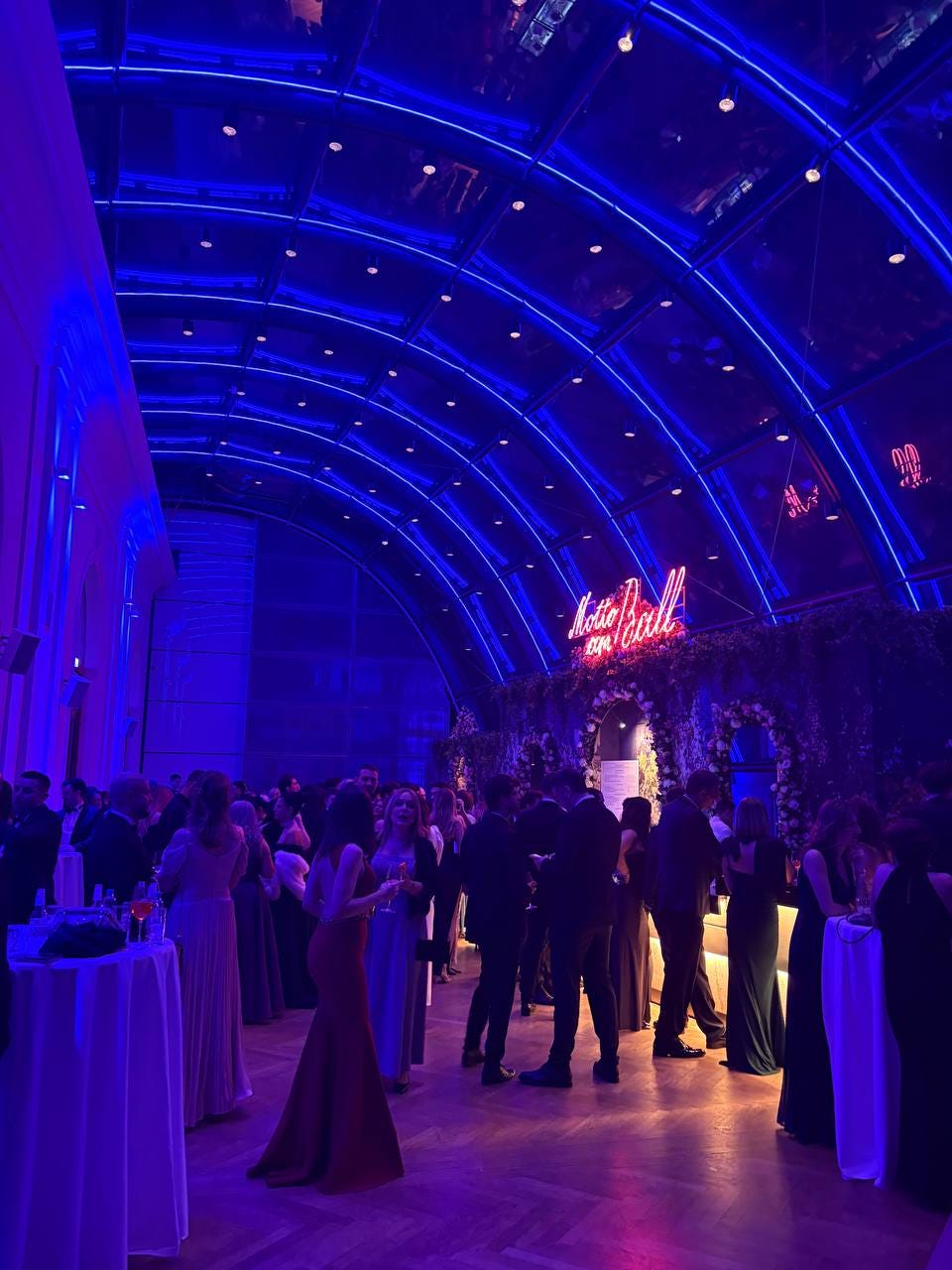
The cost of living is soaring and politicians feel it last, especially here in Europe, where they outearn almost everyone. Looking at some local celebrity photos from the Opera Ball this week, it all seemed in such bad taste. The whole thing. The white tuxedos and the red silk ballgowns, faces of local politicians, lawyers, and ex-wives of financiers blushed from too much champagne and too many bodies in a small space, tickets costing something like a third of a monthly salary of a minimum age worker. It was giving strong let-them-eat-cake vibes, as the young kids say.
Perhaps my cyncism this week comes from having been a witness to something pretty awful, which I am fully responsible for putting myself in that position, of course, but still, it made me think about, well, everything. I don’t want to go into more detail than I wrote earlier this week, so I’ll just leave this here:
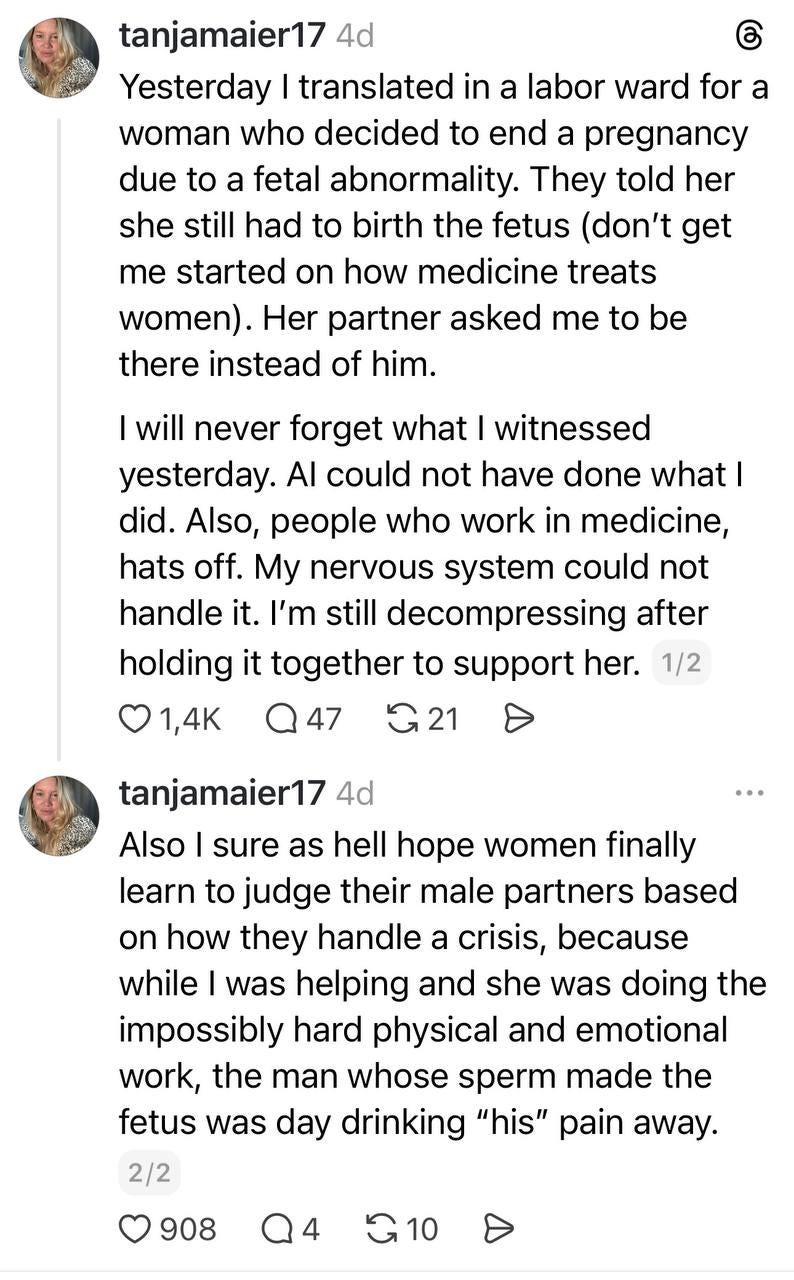
This Ukrainian couple met at the refugee housing center here in Vienna. The woman left her first husband with whom she had three kids already. She took one kid, left the older two, and moved in with the new guy. They together had a fourth kid who was born with a rare genetic condition resulting in some serious health issues. This fourth kid has not even begun walking yet and they got pregnant, again. So in a way, this sad outcome was some kind of intervention from above in what was an impossible situation. But to have to go through it (the midwife came in with no time to spare when I rang the buzzer; it could have been worse had I been alone to deal with it), and then hope that the two grown adults who should know better actually learned a lesson from the whole situation, that part is pretty heartbreaking. Are we sometimes as humans our own worst enemies?
I am glad I do not work in healthcare or social work. I would take too many of other people’s problems home with me, and would start to neglect my own. It always blows my mind how some of us go through life overthinking absolutely everything, and others, well…some Slavic cultures call it fate but I have some other choice words for it.
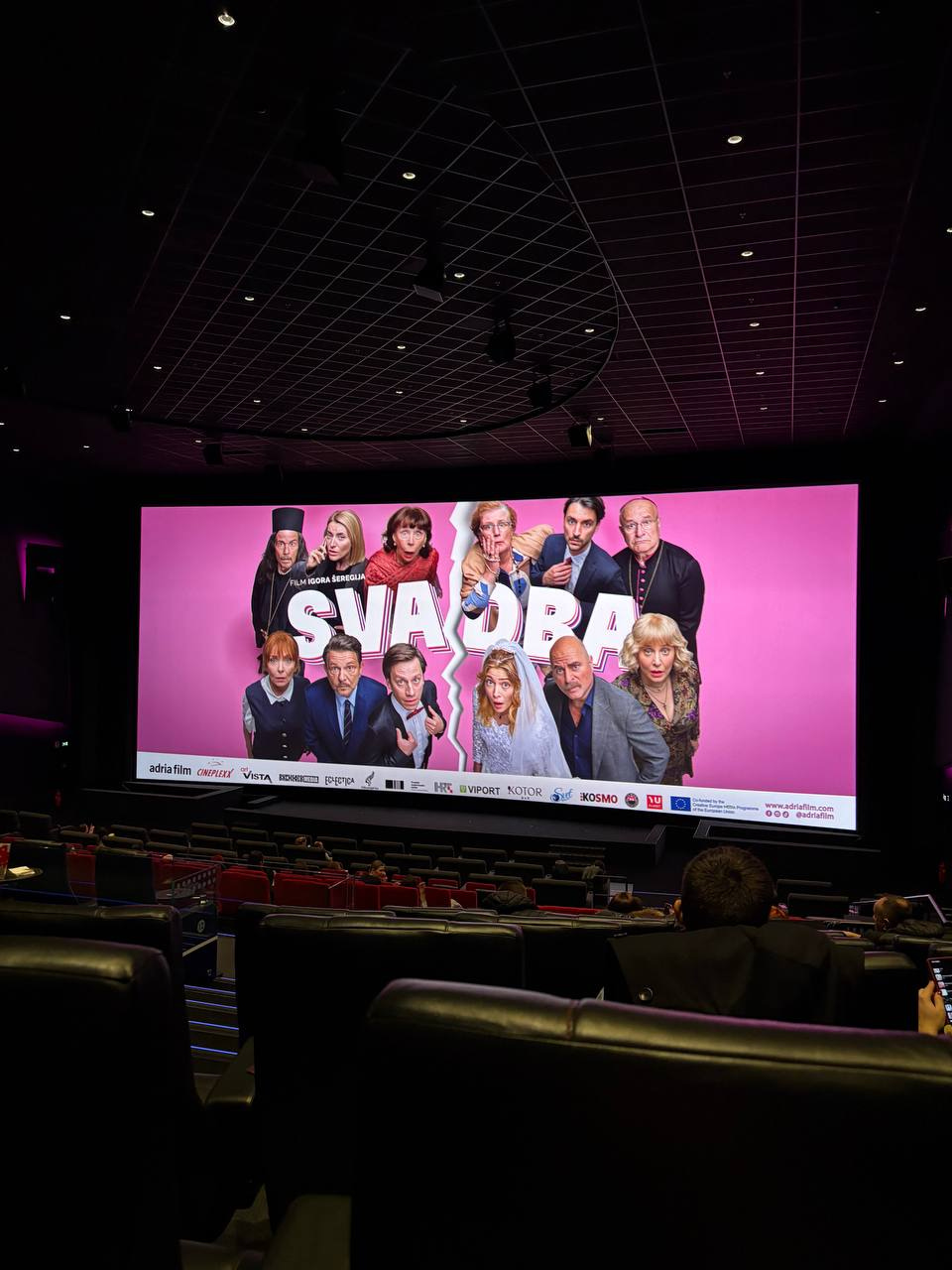
To end on a positive note — I attended a movie premier in Vienna this week. Or I should say Beč, as Vienna is known in Balkan languages. It was really incredible to see Svadba (Wedding), a Croatian-made comedy about a young couple who announce their engagement to their respective, influential families (she the daughter of a Croatian businessman, he the son of a Serbian top diplomat), and is breaking box-office records across the region and beyond. A Vienna cinema dedicated all eight screens to show the film on a Thursday evening, followed by a brief speech by the 38 year-old screenwriter and a few of the cast members. The film did have German subtitles but no one watching, perhaps except for me in parts, needed any translation.
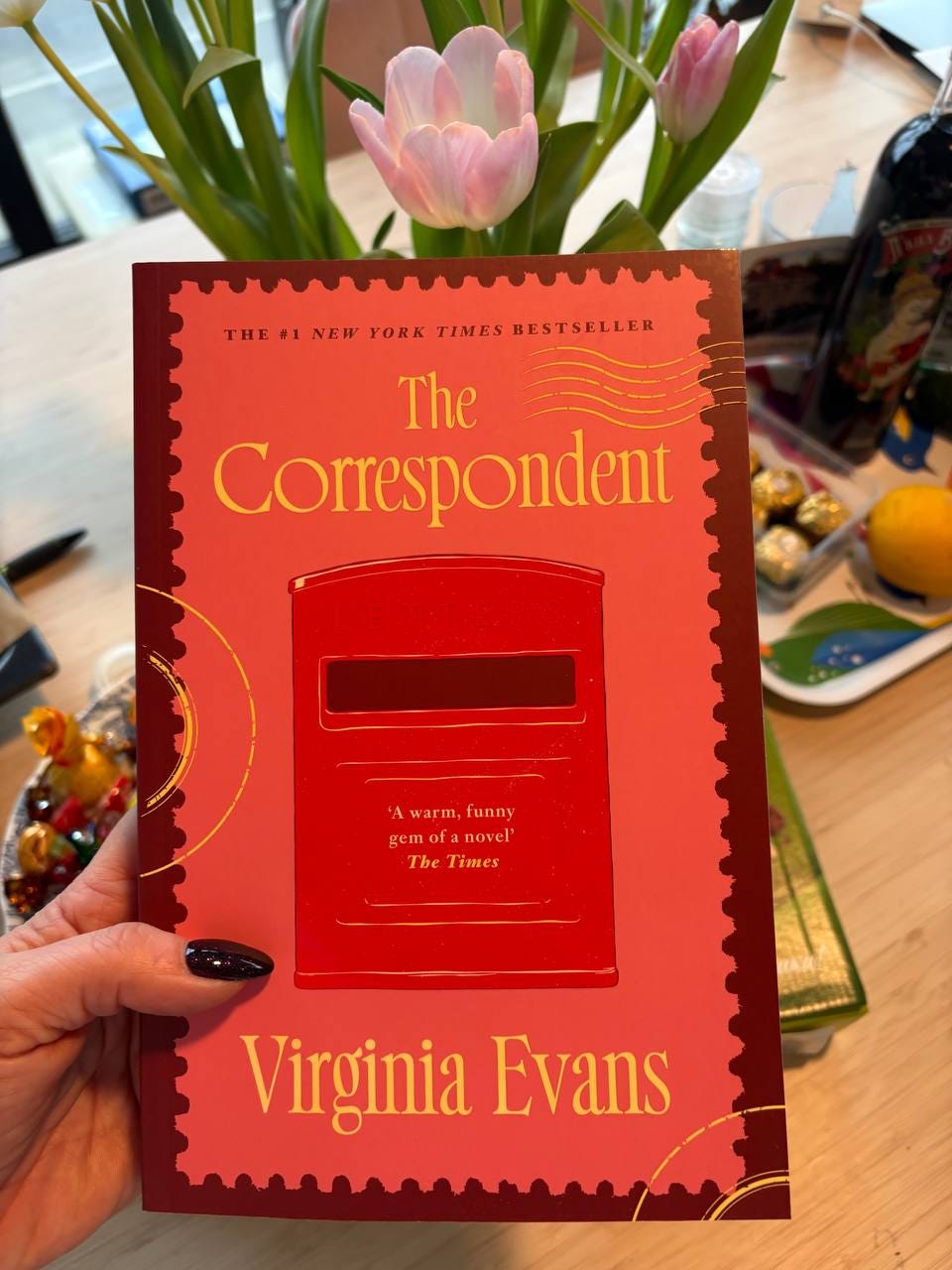
With regard to books, The Correspondent finally arrived, and I am looking forward to digging in, as I have heard so much praise for the book, I am now curious if it will live up to the hype. I would also like to recommend to you a book that is available for pre-order (out in May), a murder mystery set in Vienna, Murder at the Hotel Orient , written by American author Alessandra Ranelli. I would also highly recommend her very personal, very moving blog post Friday the Thirteenth. Her writing is so powerful. It is not my story, but parts of it felt eerily familiar. I am sure anyone who has had to walk away and choose themselves, as painful as it is in the moment, will relate. I think that is what true writer do when they hurt: they pour themselves onto the page. I understand. I hesitate to call myself a writer but sometimes putting words down is the only thing that helps.
Thank you for reading and for your continued support!
I lived in Uzice, Serbia, for several years two decades ago, and I remember the stories people told about the white Russians who had fled there after the Russian Revolution. I also remember stories about Truman, the place set up to feed people after WWII. History is there all around us; I was so privileged to hear some of them. Thank you for sharing your reflections with us.