
Fluidity
This weekend I was left thinking about how nothing, even our everday "normal", is ever permanent.

This weekend I was reminded, on both a mental and physical level, of how time does not stand still, as much as many of us would wish it to, at least in certain specific situations. I have been going crazy waiting for spring to finally arrive and the Vienna swimming pools to finally open (first world problems, I am aware). I managed to drag myself to a treadmill on a few mornings when I woke up super early with jet lag from Asia, and although I genuinely felt better afterwards, I did not enjoy the process. On a whim I therefore signed up to take a hot yoga class on Saturday morning, thinking this is something I used to enjoy before covid at a different studio which no longer exists thanks to covid. It was without much forethought (if you see this as a trend, you are correct) that I found myself in a very hot, very small room, squeezed on a stinky (yes) rented yoga mat in between a radiator and a room full of women half my age in sports bras and bike shorts last Saturday morning. I immediately remembered why I loved my old yoga studio — everything was done in a giant black bubble that heated up, and there were no mirrors. In this new location, I had the pleasure of watching myself almost pass out from the combination of heat in my head and not being prepared to do movements I hadn’t done in a while in combination with said heat. In short, I survived, but only barely, and immediately posted that if I should ever say I want to try that again, someone must please stop me.
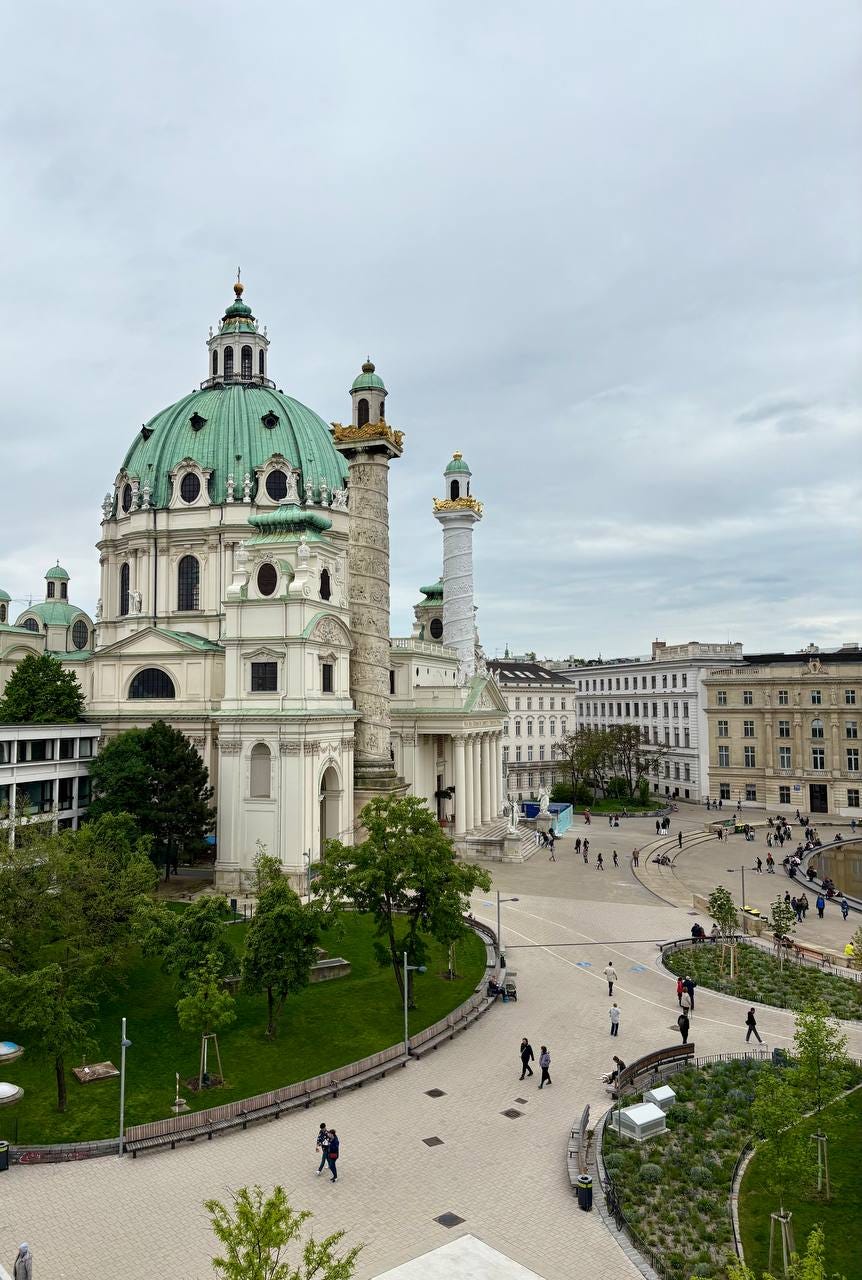
Later that afternoon, I visited a new exhibit in Vienna’s newly renovated Wien Museum about cultural life in Austria’s capital under Allied occupation post-World War II. It is a really interesting exhibit, I learned a lot I didn’t know, and everything is also in English so if you know anyone coming to Vienna this summer, it is worth a visit. At the end, you can pop out onto the balcony cafe on the floor below for some nice views over the city center.
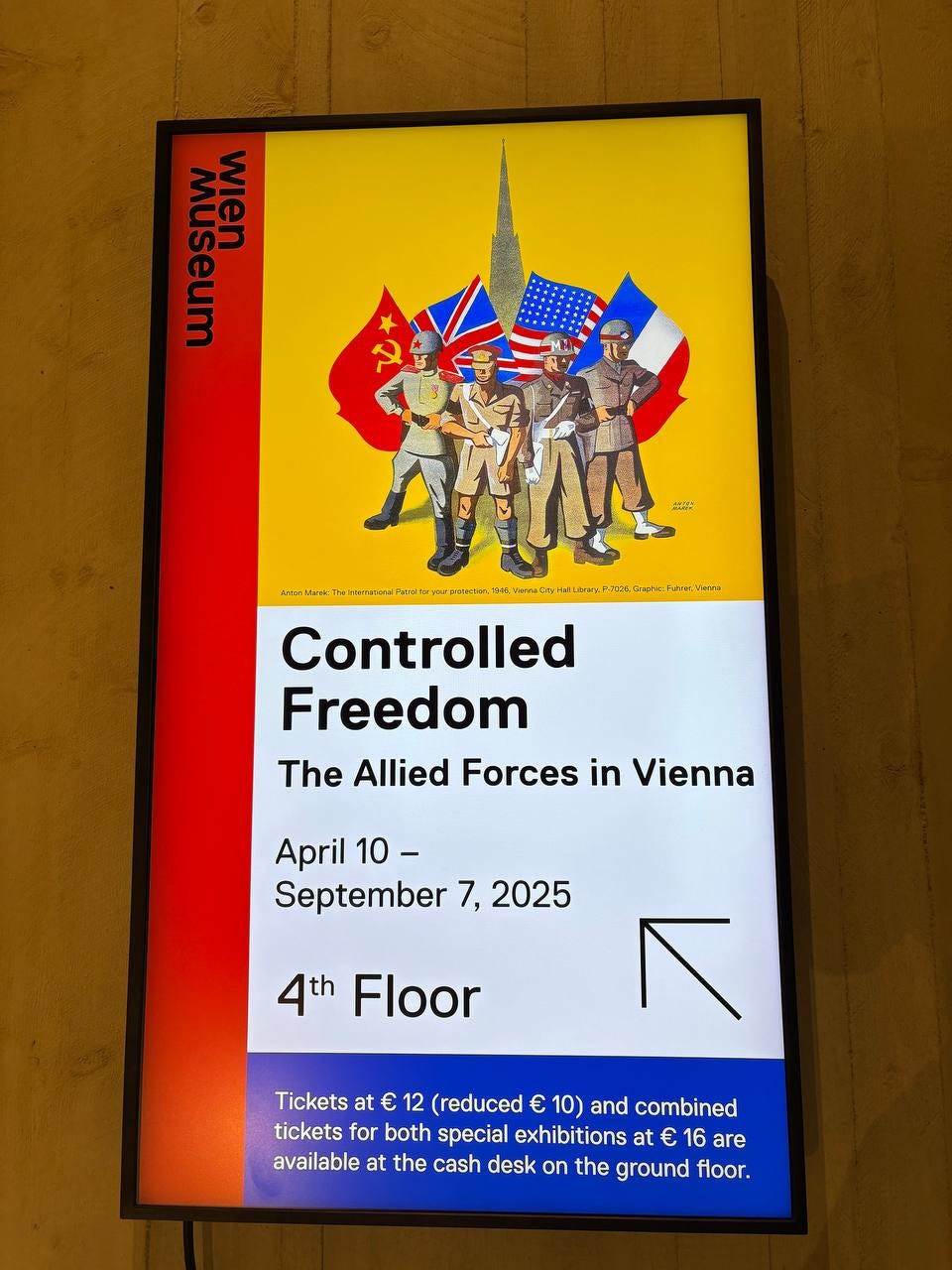
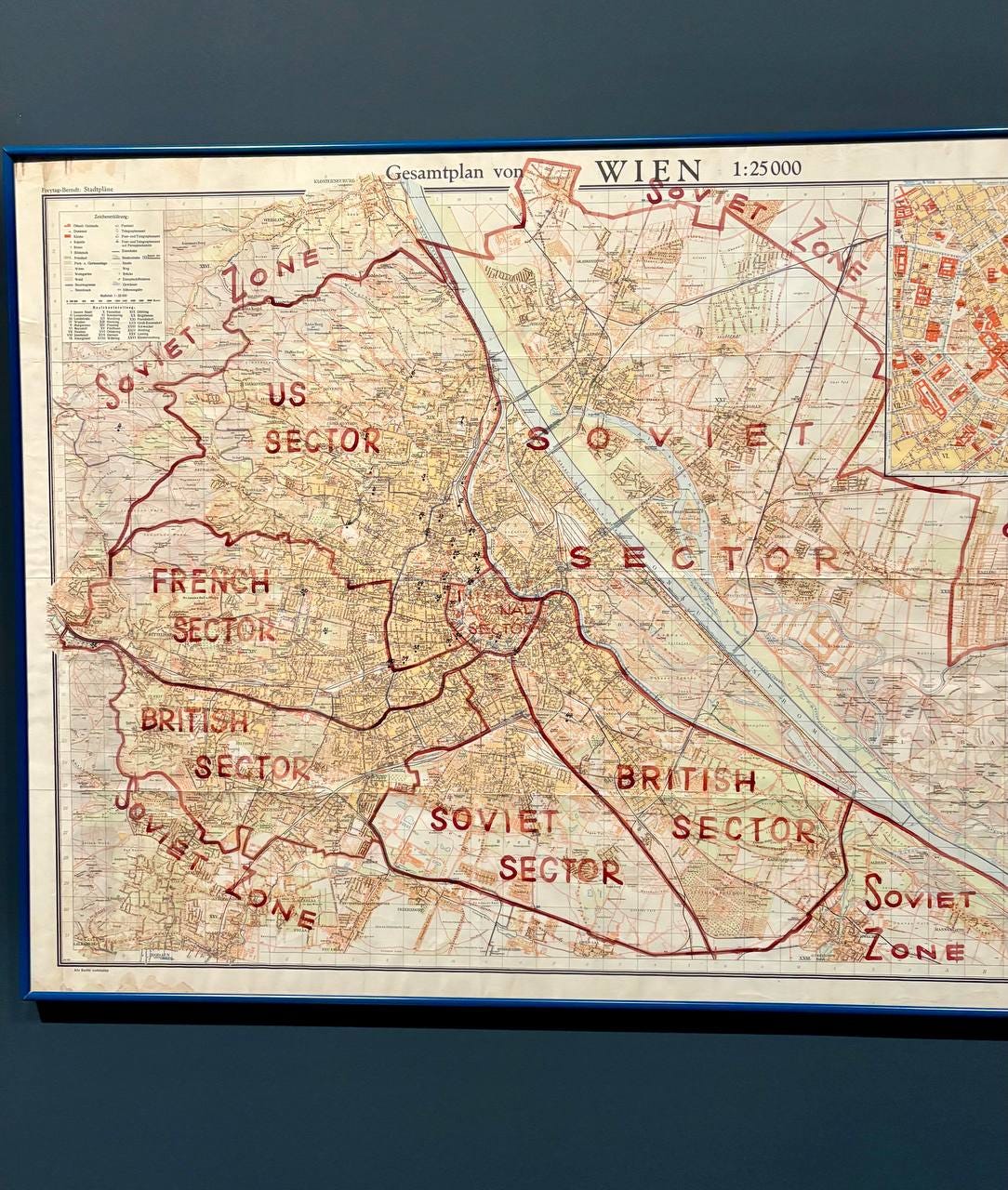
I hadn’t realized how badly damanged Vienna was in the war (there are photos of the state opera the Burgtheater both of which had to be partially rebuilt), how long economic suffering went on for, that Soviet soldiers also did to a certain extent in Vienna what they were infamous for doing in the countryside, and how the city was actually divided into geographic areas. I learned that I used to live in the American sector, and now live in the Soviet sector. Which makes sense, given for example the location of the American school in Vienna and the Soviet war memorial to themselves, but it was interesting to see this all in detail. I found myself thinking about how much Vienna has changed in the 10+ years I have lived here, and it is true, it has changed. Some of this was reflected in the city election, which took place the next day, on Sunday. I cannot vote here, obviously, as I am not an Austrian citizen (I could have applied but dual citizenship is not legal in Austria, hence my reservations). Essentially, everyone who becomes Austrian, unless you are a celebrity or very wealthy, has to give up their other citizenships.
The social democrats, who have governed “red Vienna” for over a century, comfortably won the vote in Vienna on Sunday. This was no surprise. But 1 in 5 voters in this supposedly liberal capital voted for the far right party, which was also no surprise, especially now that I have had the opportunity, through my work with Ukrainians, to see more of how other parts of the city function beyond the upper middle class bubble I lived in for a long time. When you visit schools, hospitals, municipal offices, job centers, you see the strain (I think it is fair to call it a strain, I think the money paid out must surely exceed the economic activity generated/taxes paid) on the social democratic system which was designed, decades ago, for locals by locals. There are elderly who feel uncomfortable to be outnumbered, as they see it, on public transportation by people from muslim countries. I am trying to describe these feelings without coming across as racist. The numbers are big and the changes to the society since 2015 have been significant. Nearly all politicians agree now that Vienna’s schools are under strain, due to the number of children arriving without prior knowledge of German (this includes of course Ukrainian kids too). For this reason, Austria’s parliament also passed this week a resolution to pause family reunification, meaning, for example, a Syrian who arrived here years ago and has since been granted asylum can no longer bring immedate family members to Austria.
EU law says everyone must be treated equally, when it comes to benefits too, and so this vote for the far right is a protest vote against large immigrant families receiving “minimal income” originally designed for struggling locals and now allowing people to essentially live on subsidies, with subsidized rent, and only attending German classes, sometimes for years. I am painting a picture of a stereotype, but these stereotypes are not born out of thin air. It is also important to remember that nearly 1 in 3 residents of Vienna cannot vote in local elections due to them not holding Austrian citizenship. So there are hundreds of thousands of taxpayers living and working here for years, decades in some case, who do not have a say in their local government. This is also of course highly problematic.
On Sunday morning, a friend and I attended a discussion in English amongst various European intellectuals (academics and journalists, some of which also worked/work in the U.S.) on the future of liberal democracy in the Trump era. The problem is of course the format, of speaking to the converted. It is like a soothing group therapy rather than coming up with any real solutions. It is like using water guns against real weapons. But it was interesting to listen to. I was struck by one sentence from German journalist Jagoda Marinić, who refered to the risk of Europe becoming “a tourist museum in all its beauty which used to stand for something”. Particularly now in my post-Asia mindset, I think about this a lot. I see many tourists from Asia now in Vienna, and I wonder what they think about our society, is it like travelling backwards in time for them? A Ukrainian friend visited very southern Italy this weekend (Sicily) and was struck by the poverty. This too is Europe. Yesterday I met with old friends from Moscow who are now living in Riga, and recently converted their art gallery space into a souvenir shop. It is hard work with no weekends off, but far more lucrative than selling art in a tiny country ever would be. “At least now I know everything about running a souvenir business, we can perhaps then move someplace warm and provide for ourselves.”
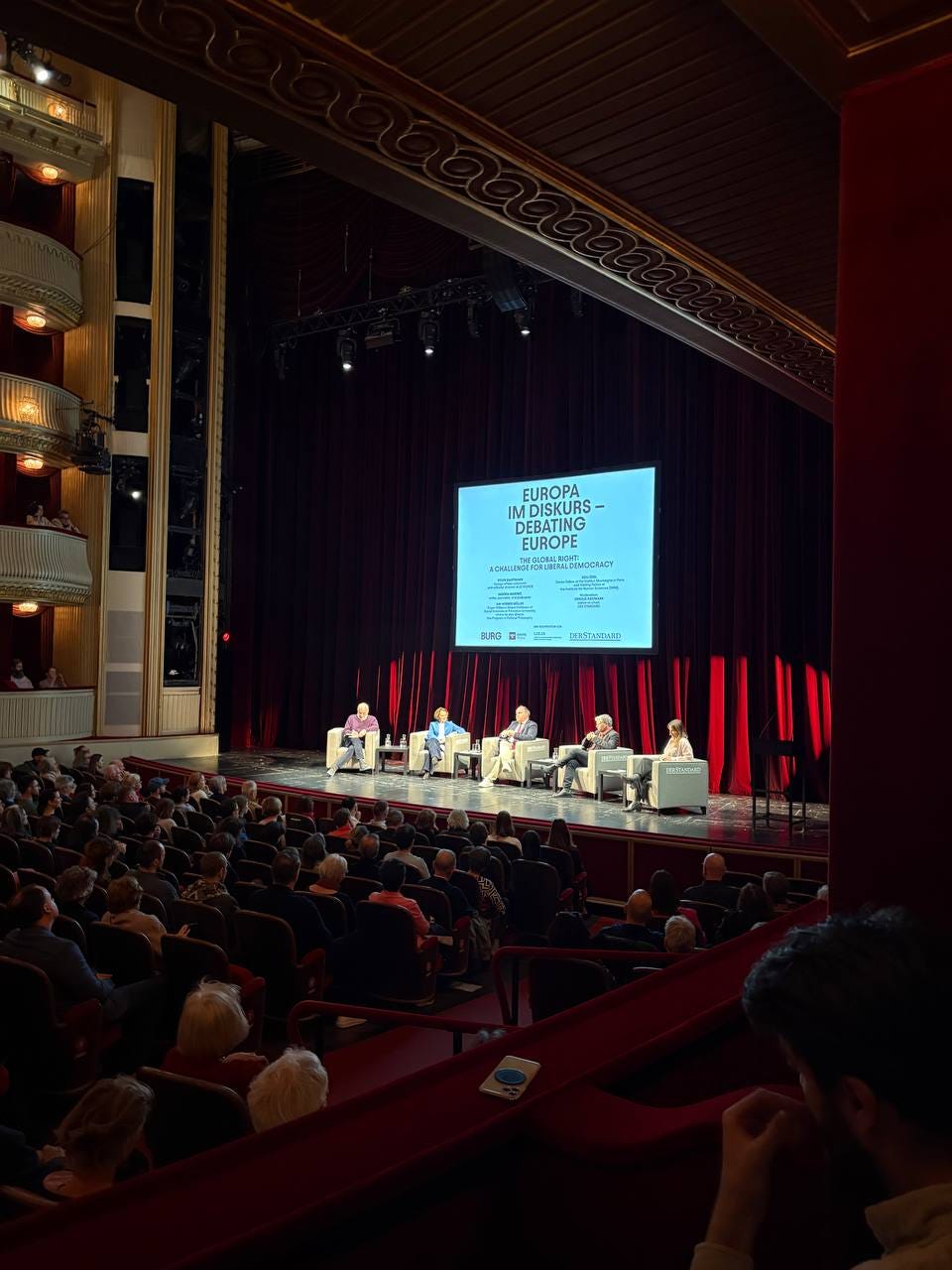
The discussion on Sunday morning interestingly did not once address the issue of large number of immigrants arriving in the EU from primarily muslim countries over the past decade, nor the fact that citizenship is difficult to attain for many who live and work in EU countries, leaving an entire group within society who cannot vote and therefore cannot be expected to live by some idea of “liberal democracy” when they are de facto excluded from participation due to the color of their passports. Some Viennese politicians have suggested introducing a new subject in schools about living in a democracy, which in my opinion reflects the problem: address the citizenship issue first. Why would you lecture kids about democracy who cannot vote?
In every EU country there are groups of people who have come from other countries with worse economic profiles in search of a better life for themselves and their children. Yet, I think it is hard for any of us to imagine what that better life would look like. And with everything in life, you have to have a vision of what your goal, your end result, looks like, in order to move towards it. Europe in the past decade feels mostly like putting out fires. I don’t have the sense that we are marching consciously towards some better version of the future for our children. At the moment the fears are how to keep budgets more or less balanced while making sure families can still put food on the table and pay rent (not exactly a fairy tale of a better more prosperous life) and containing the Russia threat. The shift away from America the protector has been swift and definitive. My oldest daughter is currently on a class trip to Boston and New York (do not ask me why not London or Dublin, no idea, it makes no sense) with their English teacher, and European parents were genuinely very frightened at the idea of their kids with EU passports crossing the U.S. border. My daughter texted me they visited a “Trumpy” host family, and when she said she was half-American, they gave her one of those “oh you’re one of us” looks. I wondered if they would have done the same if she were not blond with blue eyes.
This week I am left thinking about fluidity, how nothing stands still, and just as change can be for the better, it can also be for the worse (I was making my morning coffee and out of nowhere wondering why Brexit happened, as I pondered the new ETA which the UK has introduced for visitors arriving in the UK from non-visa countries). With processing times estimated at three days, this means a spur-of-the-moment lowcoster trip to London for the weekend is no longer possible even for EU citizens. Sometimes I wonder why all the adults in the room are constantly insisting on making everything more difficult. I think sometimes about my late mother, who refused to adopt to a smartphone, and how it is perhaps a good thing she didn’t have to live to navigate the QR-code era. Having our faces and fingers permanently in screens does not necessarily make life more enjoyable, even if it is all done in the same of simplification. I think we risk losing our humanity when we take humans entirely out of the equation. I understand the arguments about human error, but it is also nice when there is some…room for negotiation.
I have a confession in that I have not been reading or listening to much lately. I will try and change that in the near future and share some recommendations here. I did recently watch a TV series set in Kamchatka in the 1990s which was as deeply dark and depressing as only Russia can produce, and for the moment it is only in Russian (although I would not be surprised if Netflix picks up this one). With that caveat, I do recommend it if you are a Russian speaker and the dark does not scare you. The plot draws you in. Outsource.
Speaking of bubbles, my son attends a solid middle class Gymnasium in central Vienna, considered one of the "better" ones, whatever that means. His class ended up going to Malta this year for "English" because Ireland and the UK are now too expensive for a lot of families. But maybe with collapsing air fares and the collapsing dollar the US will soon be a cheaper alternative for Austrians than Ireland. Of course, I can't imagine my son's Syrian, Nicaraguan or Ukrainian classmates would be very excited about going to the U.S. at this point.