
Nobody knows
This 8th of March, known in the post-communist world as international women's day, I don't have many predictions nor answers. I do have a great TV recommendation for women, though!

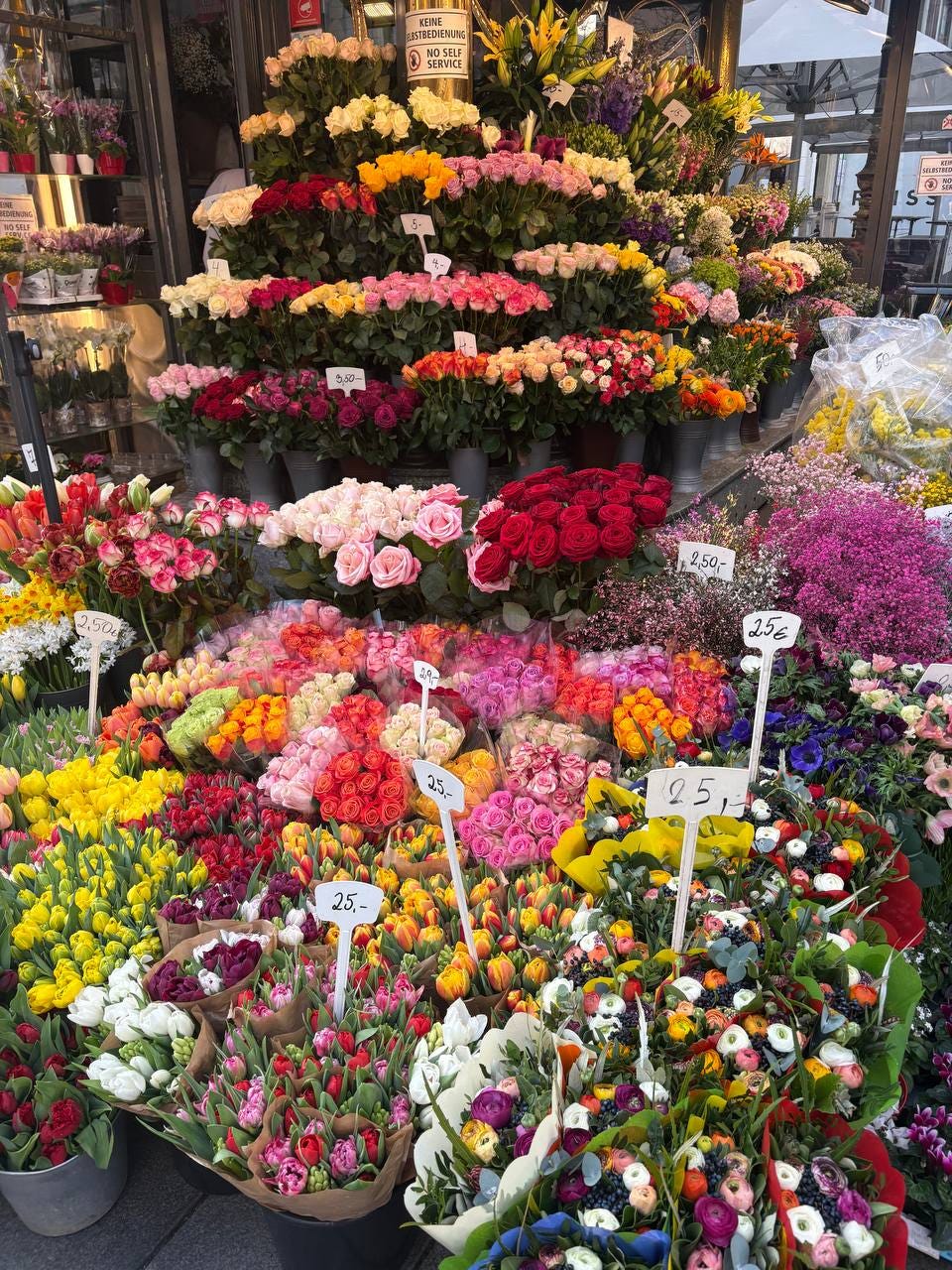
I love the 8th of March because it is like a bonus holiday I never knew existed until I moved to Moscow in my 20s and all of a sudden international women’s day was not only a day off of work, but on occasion for every woman to be congratulated. It is not a romantic day like Valentine’s. Rather, men are expected to congratulate all the women in their lives: mothers, daughters, wives, girlfriends, colleagues at work. This morning I took a walk through Vienna and saw local flower shops doing brisk business. The holiday never really took off outside of communist countries, so now if you see a man carrying a bouquet on the 8th of March, there is pretty good chance he speaks some variation of a Slavic language. Americans seem to now be aware of this new holiday (new for them), and are now cracking jokes about it being typical that women would lose an hour on their holiday (the U.S. moved its clocks today).
I struggle with what to write this week as everything I have turned to in an attempt to further educate myself about how things in Iran and the Middle East may play out has left me with the impression that this time, truly no one knows. Even the experts are hesistant to map out any potential scenarios, perhaps because the decision-making (or lack thereof to put it more correctly) that went into the U.S. and Israel launching a war on Iran was so impulsive that now it is extremely difficult to predict how this will unfold. For now, regime change in Iran seems to be off the table. How could they expect Iranians to take to the streets and topple their government while Tehran is in flames and in a giant black cloud from American bombs being dropped on the oil storage depots near the capital?
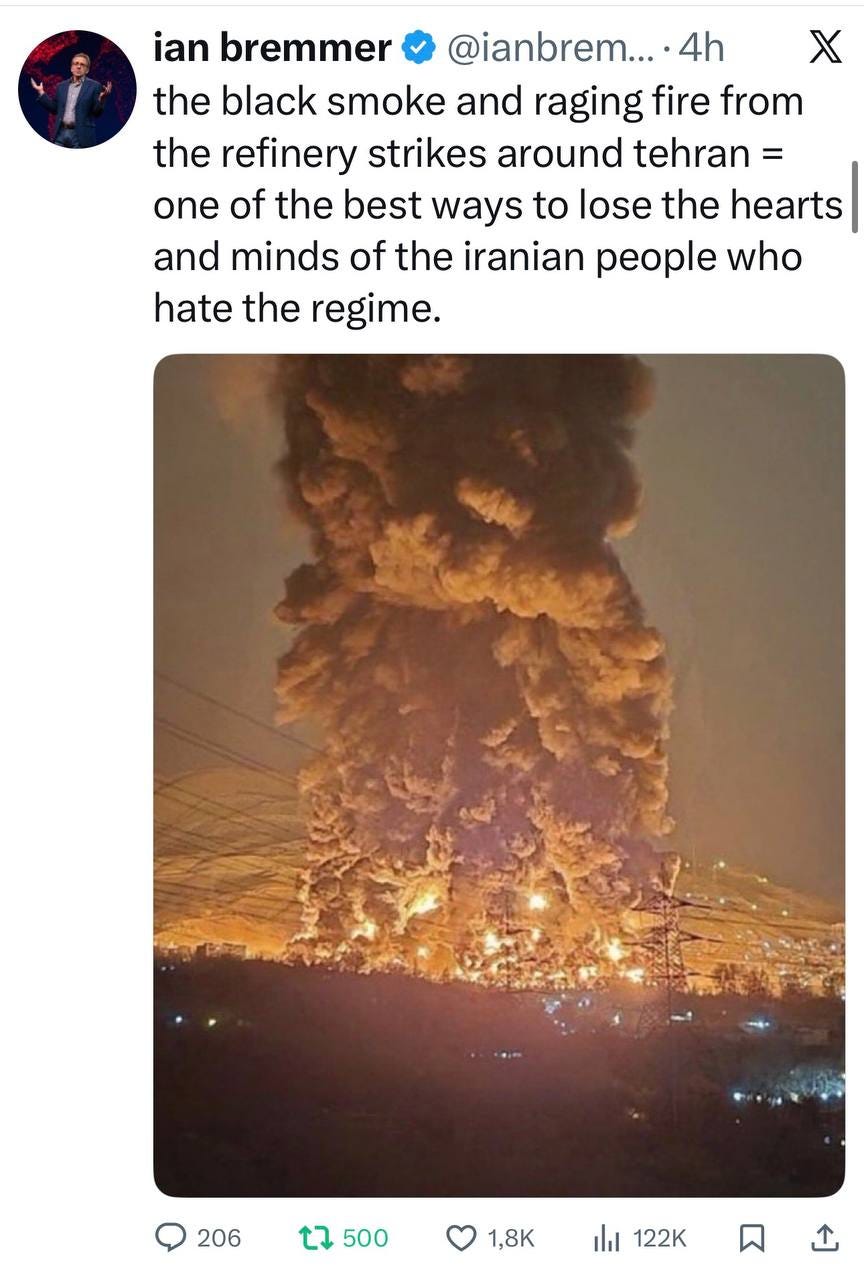
The situation in neighboring gulf countries has also not entirely quieted down. It is almost as if those who started this war forgot about all the negative consequenes to nearby economies of an active regional conflight. What are Dubai and Abu Dhabi if their airports cannot function on a normal schedule? Will American allies remain loyal while their countries are being targeted by Iran? It is almost as if no one asked any of these questions. Israel may be used to being in a semi-permanent state of war with its neighbors, but no one else is. Everyone else wants to enjoy the prosperity they have built.
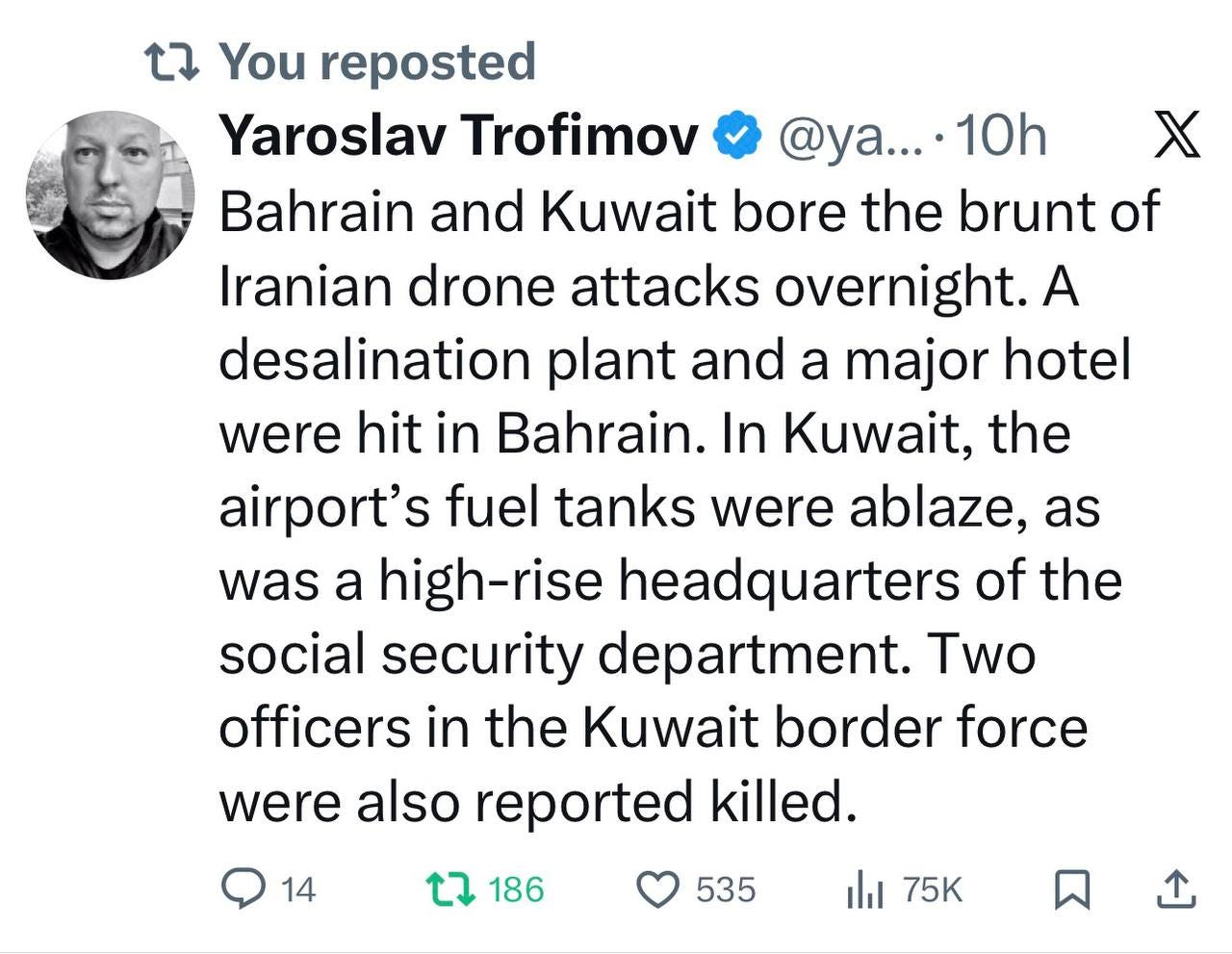
What really alarms me is when I hear commodity experts warning about the potential consequences of a huge spike in oil prices. Not just to $100 a barrel, but what if crude spikes temporarily to $200? It sounds outrageous, but it also sounds like, reading between the lines, that with one-fifth of global oil consumption moving through the Straight of Hormuz, if that were to be interrupted, it would have a monumental impact.
How High Could Oil Prices Go? (and I suppose, even more importantly, for how long would they stay that high?)
Oil prices spiking not only hits consumers around the world at the tank (particularly in the U.S. where many have no choice but to drive their cars), but of course has a negative impact on any business dependent on petroleum-based fuels to move products and people. In other words, nearly everything in our lives is somehow also touched by the price of oil. What scares me in all of these experts are extremely hesitant to say with any certainty what might happen.
“Oil prices have risen to their highest level in more than two years, after Qatar's energy minister warned he expects all oil and gas exporters in the Gulf to stop production within days.” Frightening stuff they describe, and a very real possibility if the situation isn’t tempered. I really cannot see how the U.S. and Israel at the moment walk away looking triumphant. Which means they will not stop now, which makes the situation all the more dangerous.

This article, while behind a paywall, seems to really address some of these questions.
“The effects of modern wars don’t stay confined to the belligerent states. They spill outward through supply chains, energy systems, alliances, and financial networks. If the Trump administration understands this, it has not been reflected in its rhetoric.”
Just like with the ICE mess in Minnesota (act first, clean up later), this time the Trump administration seems to have started a war without a plan for what happens when it quite literally has significantly disruptive ripple effects on the entire world’s economy. Ironically, all the American presidents in previous decades surely knew this and surely that is one of the many reasons why America didn’t do anything since 1979. The most dangerous leaders are those who actually believe they know better than everyone else. Just ask Russians how they are living at the moment, both emotionally, and economically. As a side note, the Guardian wrote this week about how Russia’s war in Ukraine is literally emptying rural communities in Russia, as soldiers are drafted from everywhere but Moscow.

“However, there are two other problems downstream from cutting off Iranian production. One is that Iran has retaliated by attacking oil production facilities in other Gulf States. The other is that the Strait of Hormuz is essentially shut down to shipping traffic. Saudi Arabia, the U.A.E., Iraq, Kuwait, Qatar, Oman and Bahrain, combined with Iran, collectively provide about 30 percent of the world’s oil.”
In short, this all sounds…very not great. I only hope there are people with access to Trump’s ear who can explain all this. Not the celebrity ministers we see on TV. People who actually understand and may be able to convince him to figure this all out before the consequences spread even further.
Here in Europe, there was quite the scandal this week which may not have made international news. It caught my attention because I have actually seen these “money trucks” driving in Vienna’s third district near the Raiffeisen Bank headquarters. I stopped and did a double take a few months ago because I spotted the Ukrainian license plate and the bank name, Oschadbank, Ukraine’s state savings bank. It turns out this Ukrainian bank regularly buys cash Euros and USD from Austria, and literally drives them back to Ukraine. This week, the truck was stopped in Hungary by the Hungarian authorities, and all seven people were arrested, and the money seized. $40 million, €35 million, and 9 kilograms of gold.
Hungary seizes millions of euros in cash and gold from Ukrainian convoy
Ukraine immediately lashed out and accused Orban, who faces an election next month, of creating the scandal for political gain. It was later reported that the seven Ukrainians were released, but I have yet to find any confirmation of the money being handed back.
“Hungarian officials said on Friday that the seven detained Ukrainians would be expelled from Hungary, but it was not immediately clear what would happen to the seized money and gold.”
Striking that these days something like this barely even makes a local news headline.
Here in Austria, I supposed I have been thinking about the women I spoke with this week. Yesterday I took my daughter for a haircut with a Ukrainian mom of three who opened her own salon here a few years ago. She seemed a bit down, a bit off from her usual bubbly self. “Do you think it is safer here than in Germany?” she asked me, with a look of great concern on her face. It took me a minute to realize she was referring to the U.S. military bases in Germany. “It is good Austria is not a NATO country,” she remarked. The scars of having fled one war, and understanding you cannot go back to your hometown anytime soon, mean you are always worried about another war finding its way to you. I also received a text message from Israel yesterday, asking about short-term apartment rentals in Vienna. This person is a Russian-speaker. There is little sympathy when you are, twice, from the agressor country, although as an individual how much responsibility does anyone hold? Am I personally responsible for Trump’s war on Iran? In my head, that sounds ridiculous.
We are now in an era where everyone is trying to guess what will be the safe place. We all worry about how this new reality will affect our daily lives and livelihoods. My daughter and I are selfishly having anxious conversations about a connecting flight this summer booked via Abu Dhabi. We want her normal life to continue despite the inconvenience (yes, I am writing with irony) of a war no one voted for. My son was on a college program trip this week to the Dominican Republic which included two supervised visits to Haiti, which is essentially a lawless economy with 70% unemployment and they were allowed to tour a market on the border accompanied by armed guards. They were told of factories where workers earn $3000 per year. These priveldged college kids were given a brief glimpse of the cruel realities of being born into one of the world’s poorest countries. “They sew Levi jeans there,” he said, as if a proverbial penny had just dropped. I am so grateful to whoever thought to show this to these kids who are studying business, less we all grow up and forget our humanity and the creul realities of our co-existence on this fragile planet. “People were bathing in the dirty river.” I nodded. I just kept listening. I realized this was life changing for a kid who has seen a lot, but never that kind of poverty or suffering.
This international women’s day I am grateful to be living in a country where women still have choices. On Friday, I accompanied a woman to an abortion. It was not my first time doing so. I have not idea the statistic but I can say in my personal experience the women have always already had children, and simply decided they cannot provide for one more. I am grateful to live in a city where abortion access, while expensive (€600 irrespective of the method, pill or surgical), is easy and treats the women with dignity. It took me all of five minutes to schedule the appointment. Staff were exceptionally professional. I do not take any of this for granted. I talk about it openly with my own daughters.
Strange times we are living in while there is so much to fret over on a global scale, we seem to be gripping ever more tightly to the little pleasures that bring us joy. In that vein, I would like to recomend a wonderfuly unhinged new show on Netflix, Vladimir. I have not read the book, but I was immediately hooked. I loved the story and the acting and highly recommend it, expecially to women of, shall we say, like me, already a mature age.
Thank your for reading and apologies that this week I am a little short on substance. The media I have consumed this week has felt the same way. I think we are all searching at the moment for anything definite, and this still feels rather elusive.