
Not when, but how
A few local annecdotes, Russia's economic and social woes, what would an end to the war might really mean for Ukraine, is Cuba next, and a documentary from Bosnia.

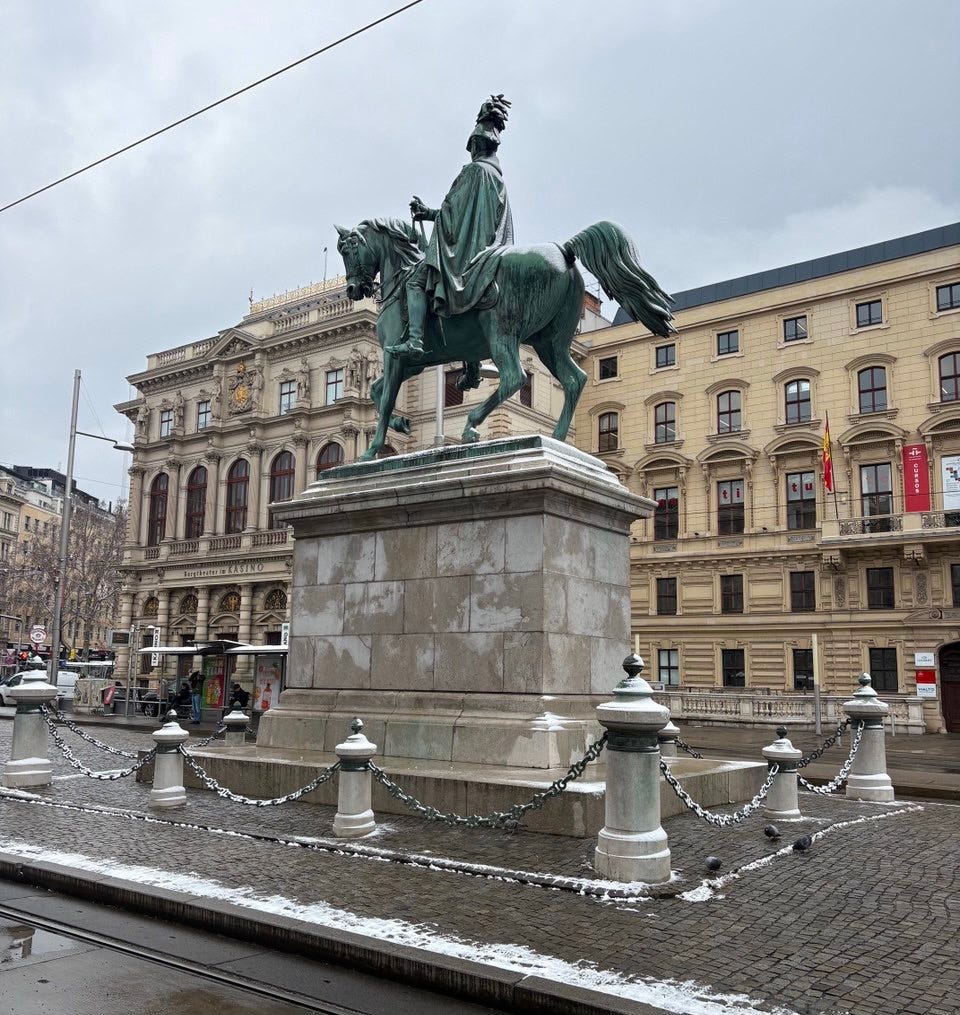
It is only Wednesday but I already have much I wanted to share with you all so I find myself at the keyboard this morning. It is, in a way, like therapy for me too.
The sun has decided to bless us with its presence for a few hours. These days we take none of it for granted. Yesterday morning I awoke to sun and a dusting of snow, headed out dressed for winter, only to get caught in a downpour around nine. Everything feels fickle, even the weather.
I had to give testimony yesterday as a witness in a local police station. Nearly a year ago, I was in my friend’s car when she bumped into the parked bumper of a delivery van. She had checked, and driven off, seeing no visible damage. Some concerned citizen reported the whole thing, much paperwork back and forth, and I spent half an hour yesterday trying to recall how exactly I remembered it. The police officer had one of those keyboards which light up like a disco ball, and I was mesmorized by the neon colors racing before my eyes as I searched for the German words for parallel parking and the like. It was an exercise in futility, a complete waste of taxpayer Euros, over an offense which has a maximum fine of a couple hundred Euros. Alas, they cannot issue the fine unless they determine what actually happened. So hours are being spent trying to figure out something no one actually saw, and the parked car never reported any damages. I was not allowed a copy of my testimony. The woman with the neon keyboard will decide who she thinks is telling the truth. As she told me, “if a person crosses a street wearing a red sweater, and bystanders are asked what color was the sweater, they will not all say red.” I was only thinking: does it matter what color the sweater was?
Later yesterday, I was riding one of Vienna’s commuter trains, and two ticket inspectors appeared, which is a normal occurance. What was abnormal is they were accompanied by three police officers, so five grown adults all on state paychecks making sure we had all bought tickets. We had not all bought tickets, of course, and I watched as a heavily tattooed man, the kind of tattoos one might get in prison (neck, hands), ever so quietly maneuvered himself out of his seat and towards the exit door, without any of the five enforcers actually seeing him do it.
I smiled at the young woman standing next to me, and she smiled back. It was like a David vs. Goliath and I think it’s fair to say we were all cheering for him to get away because the whole scene was just comical. He quietly slipped out into the train station at the next stop like an alley cat into the night. One of the three police officers had a beard and a ponytail braided to his waist. I wondered if this is how we are planning on stopping a potential Russian invasion. With inclusive definitions of what policing is supposed to look like. There are reports on local TV now all the time about possibly increasing the number of months young men will be asked to serve in the army (mandatory army or civilian service is already required of all male Austrian citizens once they turn 18). The videos show them practicing combat of the kind you read about in history books. Not a drone in sight. It is as if everything around us is moving at lightening speed and Austria has pressed the playback slow button.
Scrolling through Instagram this morning, another local story caught my eye. A while back I listened to a podcast in German in which a school director was interviewed. He is in charge of a middle school in a part of Vienna where the majority of kids do not speak German at home. He was also openly a member of the local conservative ÖVP party. His observations on what immigration has done to education and vice versa were, at the time, I thought, rather interesting. Because it is the elephant in the room few on the left want to talk about. This morning, I read a post by Falter that this same school director gave an interview to Russian state TV. Which is incredibly telling at just how adept the Russians actually are in finding exactly which Europeans at the local level might be sympathetic to their own anti-immigration, right-leaning talking points. I have no idea why the school director thought this was a good idea, or how it was even allowed, but given the lack of staff in education in general in Austria at the moment, I doubt he will lose his job over it. Falter reported he did resign from his ÖVP roles. But that is like a public apology of a politician. Meaningless.
None of this changes any of the underlying issues, of course. A state budget that is bleeding money and yet reform seems impossible (police examples, but I see the waste in healthcare on a regular basis, too), and an education system which divides kids at the age of ten into “smart” and “not smart” and then wonders what happened when half the kids grow up being not entirely functionally literate in German.
Europe has enough on its plate without having to worry about Trump and Putin. But here we are.
With the new year, there has been more reporting about real economic woes within Russia. The picture is getting worse. This BBC Russia report on the effects of food inflation:

Alexandra Prokopenko writes for The Economist, “Russia’s Economy Has Entered the Death Zone”. She added, on X:
“Russia’s economy hasn’t collapsed. It has entered the “death zone” — surviving by consuming its own future.
Growth at 1%. Budget deficit rising. Military sector expands while civilian industry shrinks.
Interest payments > education + healthcare.
No climber survives this altitude forever.”
So Russia’s economy is borrowing against its own future. The same thing Putin is doing with his population. The New York Times travelled to a forgotten, impoverished village in Kamchatka with a majority indigenous population and wrote a stark piece about what it is like when most of the men are called to war, and most of them never come home.
A Russian Village of Military Valor Waits for Its Reward (gift link)
“As a foreman for the local electric network, Aleksandr Chevvin, Ms. Zakharova’s husband, did not need the money. But in August 2023, he could not be dissuaded from volunteering because, he told her, his grandfather fought in World War II. A Ukrainian tank shell struck Mr. Chevvin’s dugout days after he deployed, killing him.
She did not tell their five children for 18 months, until her son in kindergarten was shocked to discover a picture of his father among the dead soldiers honored on the schoolhouse wall. Ms. Zakharova keeps waiting for Mr. Putin to appear on television to explain more clearly the purpose of the war.”
Scrolling through TikTok yesterday, I came across a video of a recent meeting between Putin and female army officers. A mother of four, who looks ethnically to be from one of these indigenous communities, or perhaps Central Asia, is an army medic, and tells the Russian president how she was stationed just 40 kilometres from her husband, a marine, but they didn’t see each other once during that year. He was killed in action, and it was she, alone, who discovered his dead body and pulled him from the battlefield for burial. Putin listens to this horrific story, stone-faced, and then makes a rambling comment that this is the stuff of books (again the history motiff), poems, and perhaps one day someone should make a fictional movie based on the story of this woman’s heroism. The others around the table nominate her for a medal. She is in tears recalling what she went through, but adds, “I pray for peaceful skies and our victory”. No one even knows anymore what victory, over whom, for what purpose. The war has become an ingrained part of everyday life in Russia, too.
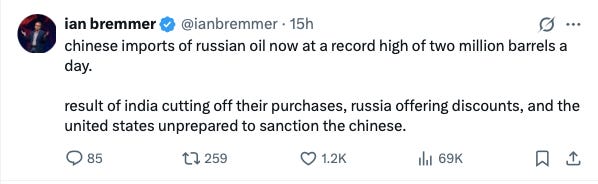
Let’s also not forget which other countries are continuing to fund Russia’s war (I did see the kung-foo robots for the Lunar New Year, and yes, they are impressive).
In my conversations with Ukrainians in Vienna recently, I have noticed a shift. They are nearly all, without exception, now talking about Austria as their forever home. With no doubt. Despite not having a legal status of forever here. Yesterday I spoke with a grandmother who is here alone with her granddaughter. She has found a job, and her granddaughter is applying to a competitive public school (gymnasium). The girl’s parents are both in Ukraine, both working for the army. This is their new normal. The grandmother talks about this set-up as if it will continue for the forseeable future. The granddaughter speaks very good German, almost without an accent, carefully choosing her words, trying not to make any grammatical mistakes. For this family, and thousands of others (millions, if you look around the world), they now see their future beyond Ukraine’s borders. And that is a huge issue, because what does a post-war Ukraine even look like if the Ukrainians who left do not move back home?
The New York Times ran an interesting essay by Nataliya Gumenyuk this week in which she argues it is not about when the war ends, but how.
When Will The War End? The Question is Meaningless (gift article)
“I spent a lot of last year — as I did in other years — traveling around Ukraine talking to people. What’s clear to me is that this war no longer feels like an interruption; it’s just reality. Ukraine’s military may be exhausted, but it’s also the most battle-hardened in Europe. The front line, with its split screen of futuristic drones and the trenches reminiscent of the wars of the early 20th century, may look like the future and the past at once. But it’s just our present, the only one we know.”
I read her piece and had a different takeaway. I read about an economy which has lost millions of citizens and is now centered around an army at war. An economy in which men and women risk their lives for a paycheck larger than the average, or leave the country, or hide if they cannot afford to leave. Entrepreneurs suddenly want to go from operating restaurants or selling cars to producing drones. But what happens when one day, in the not so distant future, the war is determined to be over with the stroke of a pen in Geneva or Istanbul? What happens to the trenches and the drones and the ex-military suddenly left unemployed? These questions are the kind ordinary Ukrainians ask themselves, and then decide not to go home.
The bigger quesion is what will all the other countries now hosting Ukrainians do with them from a legal point of view. Austria is one of the few which offered the possibility to apply for permanet residence if one is gainfully employed and can provide for one’s family according to a government formula calculating income, rent, etc. But for most others, the EU temporary protection will end in March 2027, and it will then be up to individual countries to decide what to do. Meanwhile, it will be five years since the war started. Five years of marriages, divorces, births, deaths, new and lost jobs, school, kindergarten, university, health scares — life marches on no matter which country you are living in, no matter how “temporary” authorities call the status of Ukrainians.
Military analyst Michael Kofman just published his outlook for the war in Foreign Affairs, Ukraine’s War of Endurance: The Fight for Advantage in the Conflict’s Fifth Year. I have a hard time with military analysis because I see war in general as just pointless pain for nothing. I believe most ordinary people would rather live in peace and be able to go to work, raise their families, and enjoy their lives with which color passport and flag they have flying above them being of secondary concern. There is now, for example, a city of 50,000, Kramatorsk, which is still under Ukrainian control but if all of Donetsk region were to be given to Russia at the negotiating table, that city would overnight become Russia. People who live there know this. And yet, some stay. As humans our lives look more similar than different across borders, especially now that we are all connected virtually. There are Ukrainians here in Austria whose relatives are now living in Russia, in Donetsk. The biggest issue is how to communicate, as Russia messes with WhatsApp and Telegram. Life in those parts is not rosy, but it has not been since 2014. Those who remained made a choice.
While I was looking for the article about the military situation on the ground in Ukraine, I came across this piece, which I must admit, I am bookmarking for later. I have a pit in my stomach. I know I should be informed, but these things are easier to read from DC:
Europe’s Next War: The Rising Risk of NATO-Russia Conflict
I often tell myself in Austria that Russia could take over without firing a single shot. I still believe that to be true. I don’t know why it gives me a false sense of security. I suppose the same way many people in Ukraine never believed Russia would ever do anything, until they woke up that fateful February morning nearly four years ago.
In closing, I would like to recommend this podcast on Cuba, which might just be the U.S.’ next target after decades of failing, and with Rubio at the helm…and this new documentary, The Track, which I have not yet seen but looks very good on Amazon Prime about Sarajevo, Bosnia, and what has become of the 1984 winter Olympics facilities, the impact of the war decades later, and the next generation of athletes…I saw a preview here.
Thank you for reading!